
Context
From ~2022 – 2023, I was contracted by Plural Learning Lab to help build an AI-powered learning platform centered around the practice of logging and observing moods.
Role
I led the design of the Plural learning platform; I also contributed as a front end engineer.
Collaborators
Full stack engineer – Alex DeBrie
The problem
Every day, in school and at work, we are expected to work well with others (in fact, success often hinges upon being able to collaborate effectively)––and yet, there exists very few resources for cultivating the so-called ‘soft’ skills necessary for teamwork.
This lack was particularly acute in diverse, distributed teams made even more distributed following the pandemic.
Before I started working with Plural, they had been successful offering one-off soft skill training courses. Delivering these courses, however, was extremely labor intensive, therefore making it impossible to meet demand and grow.
The challenge
Turn Plural’s existing IP on business design and existential moods into a scalable ‘soft’ skills application that could have a measurable, positive impact on team performance.
User research
I spoke with past course participants to better understand which elements they found most valuable. The top takeaways were:
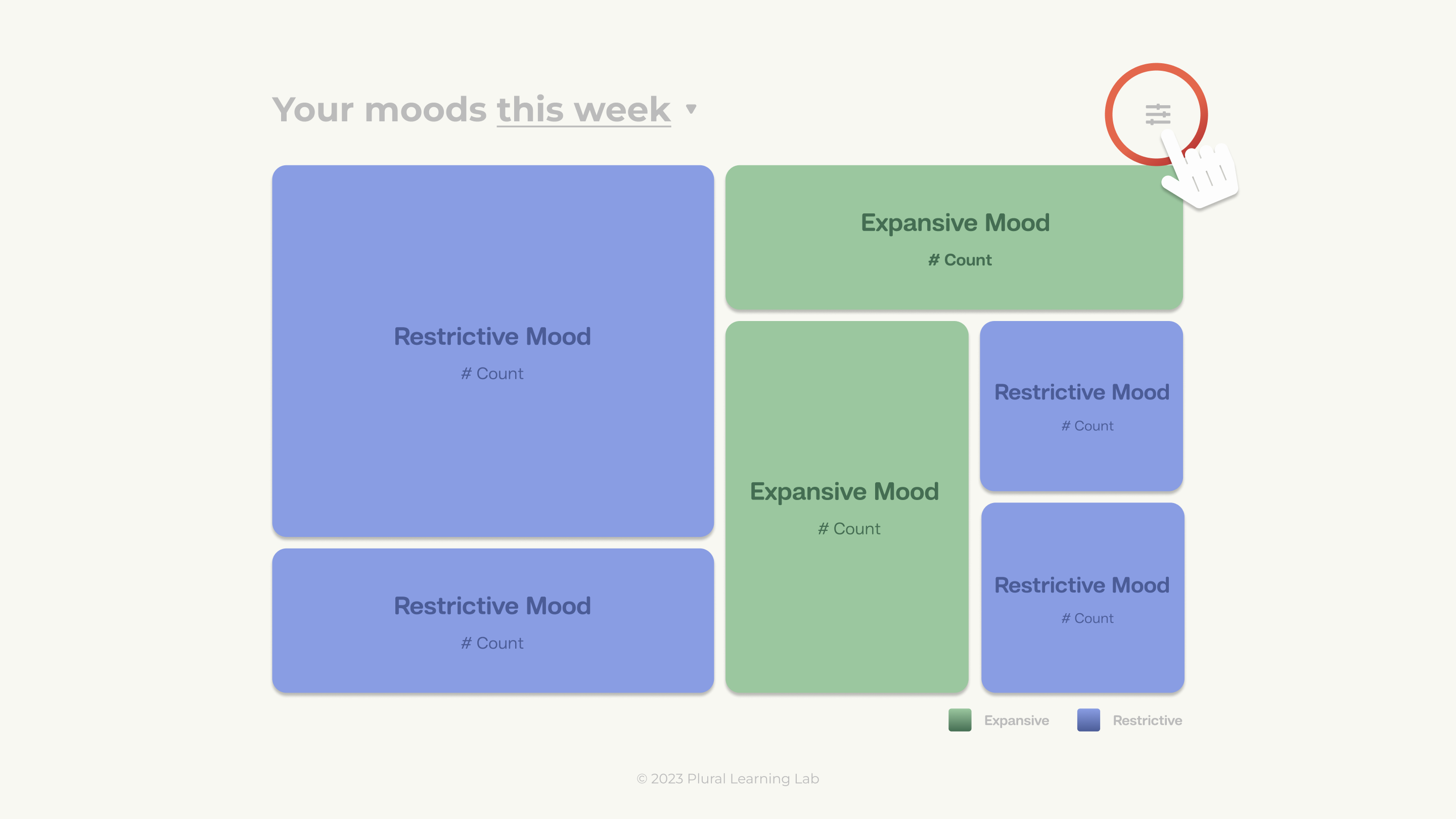
- Keeping track of their moods
- 1 on 1 time with instructors
- Work sheets and readings
We also looked at existing mood tracking platforms and found a common criticism of them was that they were too surface-level; i.e. they were helpful for recognizing patterns in your moods, but didn’t provide much guidance beyond that.
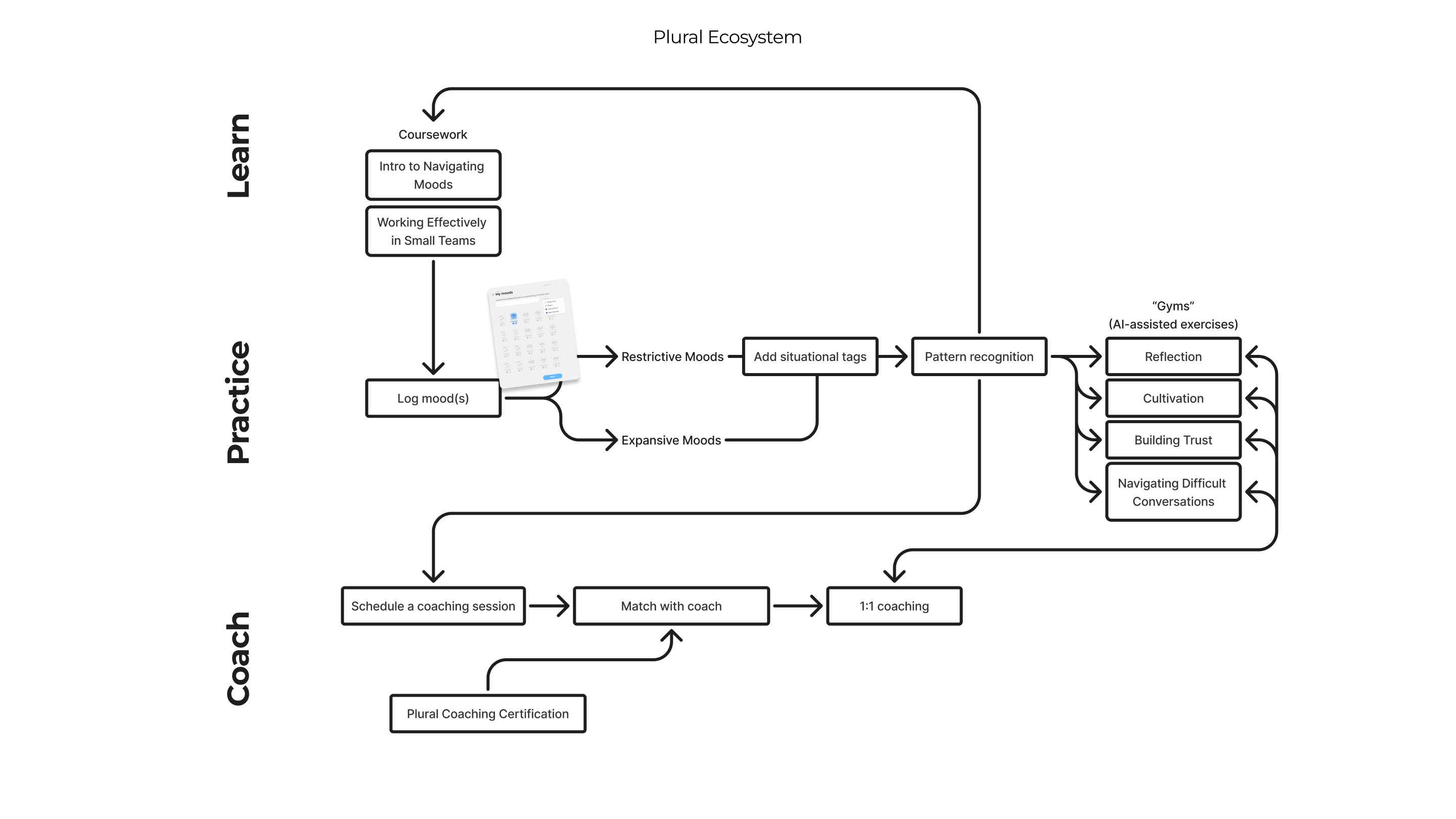
The idea was to essentially create an all-in-one learning experience that had the functionality of a mood tracking app as an entry point, the depth of Plural’s existing course materials, and the personalized feel of one-on-one coaching.
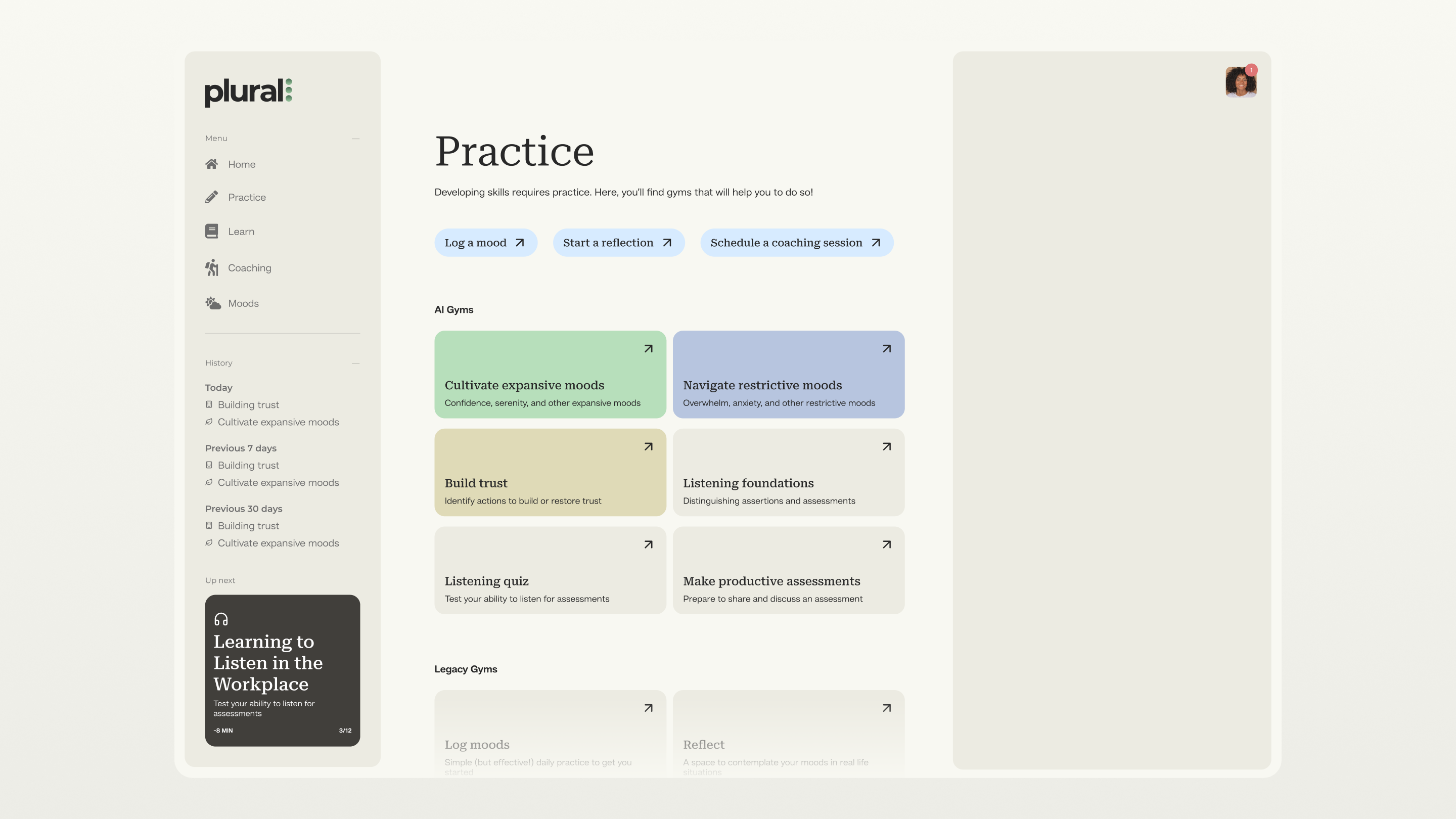
Within that ecosystem, the primary goal was to try and create a space that would foster the “Aha” moment students experienced when working with coaches. We ultimately landed on this notion of an AI ‘gym’: a personalized, interactive version of Plural’s existing workflows that users could engage on demand, made possible by an LLM trained on Plural data. We then created 10 different AI Agents, backed by both OpenAI and Claude models, that were designed to interact with people to help them learn to build trust, navigate difficult conversations, and cultivate expansive moods.
Outcomes

Plural was launched as a pilot program at the engineering schools at CU Boulder and Universidad Católica in Chile. Of students and faculty who were surveyed, >97% found Plural to be helpful to them with a Net Promoter Score of 75 (~40% higher than industry average). Since then, versions of the application have been employed in teams from Microsoft, Salesforce, and the US Navy.